Mary Ellen Mark, Photographer and Force of Nature – NYTimes.com

More on the passing of Mary Ellen Mark from the New York Times LENS:

Mary Ellen Mark, one of the leading documentary photographers of the last 50 years, died on Monday from myelodysplastic syndrome, a blood disorder, according to her studio librarian, Meredith Lue. She was 75.

Melissa Harris, the editor in chief at Aperture, who edited two books with Ms. Mark and was a close friend, described her as “a force of nature” who pushed herself despite her illness. She described Ms. Mark as someone who cared deeply about people and calling attention to injustice. That meant going back often to her subjects, in order to delve deeply into their lives, relying on that connection to give her work a humane touch.

Above all, Ms. Harris cherished Ms. Mark as a “fiercely loyal” friend.

“She was sort of chivalrous in a way, a remarkable woman and a remarkable friend,” Ms. Harris said. “As a photographer, she was an exceedingly sensitive storyteller who related very intimately to her subjects, and was able to convey something about them that got right to someone’s heart.”

via Mary Ellen Mark, Photographer and Force of Nature – NYTimes.com.

Legendary Photographer Mary Ellen Mark Dead at 75

17949015171_29d0da75a3_o-Edit-4

Mary Ellen Mark at the Leica store, Los Angeles, 2013. Photos by Donald Barnat 50lux.com

Sad news VIA Philly.com –

Mary Ellen Mark, a photographer known for her incredible humanist photography, passed away Monday in New York City. A rep confirmed the news Tuesday morning. She was 75.

Mark was born (March 20, 1940) and raised in Elkins Park. She graduated from Cheltenham High School (“I was head cheerleader,” she told the Inquirer’s Stephen Rea in 2008). In 1962, she received a bachelor of fine arts in art history and painting from the University of Pennsylvania, and a master’s in photojournalism in 1964 from Penn’s Annenberg School of Communication. She would return to the local institution to receive honorary doctorates in fine arts in 1992 and 1994.

17325774014_f552df10f4_o

Mark said she got her big break while working for a Penn alumni magazine. On assignment at Rosemont College, she met Pat Carbine, then managing editor of Look, who later took her pitch to photograph London drug clinics.

“From the very first moment I took pictures [on the streets of Philadelphia], I loved it,” Mark told the Inquirer’s Michael Matza in 1988. “The thrill was the idea of just being on a street, turning a corner and looking for something to see. It was just an amazing feeling. … Photography became my obsession. … In a way it’s not so different when I go out to work now. It’s just that now I have years of experience in knowing how to use that little machine in front of me – at least better than I used it then. When it’s good and interesting it’s still that feeling of being on the street and wondering – God, I love this! – what’s going to happen next?”

via Legendary Philadelphia-born photographer Mary Ellen Mark, 75, dies.

17948339515_ba91c886b0_o-Edit-4

Art, Documentary, or News: Photography and Racial Politics

Somewhat unimpressed with my current photography, here’s a little something from last year. 😉

donald barnat's avatar50'Lux

L1050830-Edit-2That title suggests a lot, I know. These are amazing times online. There are at any point, almost surely simultaneous, multiple battles occurring in larger cultural wars over things like racial and sexual politics. The recent Stephen Colbert – Suey Park skirmish was fascinating, the back and forth analysis provided me, at least, with an education in the current taxonomy of racial and gender politics at least framed by a small subset of the larger culture.

L1051069-Edit-2

Anyway, so it now falls on photography to fire our interest and further the fine-tuning of all of our racial and political sensibilities. Here specifically, in the article I’m linking to, the analysis turns towards two different presentations of the same photographs taken (obviously) by the same photographer and how those presentations differ and cross many lines. Some that are probably okay to cross and some that are, increasingly, not.

L1051096-Edit-2

None of us really want…

View original post 285 more words

Odd, Old Days in Times Square – NYTimes.com

Stolen from a Brooklyn church on Christmas, St. Bernadette was found dumped near the Belt Parkway. 1992. Andrew Savulich

VIA LENS at the NYTimes:

Among the denizens of the pre-Disney Times Square was a casually dressed man with unruly white hair sitting in a beat-up Dodge Valiant outside a Howard Johnson’s restaurant. He spent his time listening to a police scanner, which emitted a steady, scratchy stream of reports of gang shootings, car accidents or suicide jumpers.

Ah, Fun City, 1980s edition.

There was so much crime in New York back then that the white-haired man, Andrew Savulich, had his pick of numerous scenes of mayhem he could photograph. It was a more dangerous time to be a New Yorker, but a good time to be a spot news photographer. He often got to crime scenes ahead of the pack, although his photos were a little too strange and quirky for the tabloids. On the rare occasion he sold crime scene photos for $50 or $75 each to newspapers and wire services, editors usually cropped them into more conventional images.

So, on slow evenings Mr. Savulich would leave his car and prowl through Times Square and photograph strange moments that unfolded right in front of him.

“In the ’80s it was still lusciously seedy and wild,” he said. “It was a great place for street photography.”

via Odd, Old Days in Times Square – NYTimes.com.

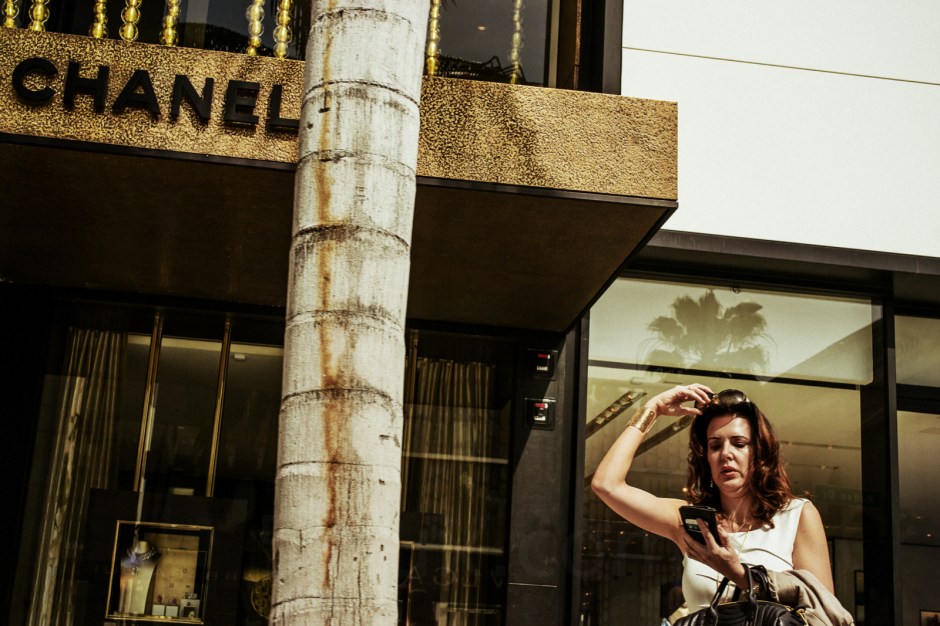
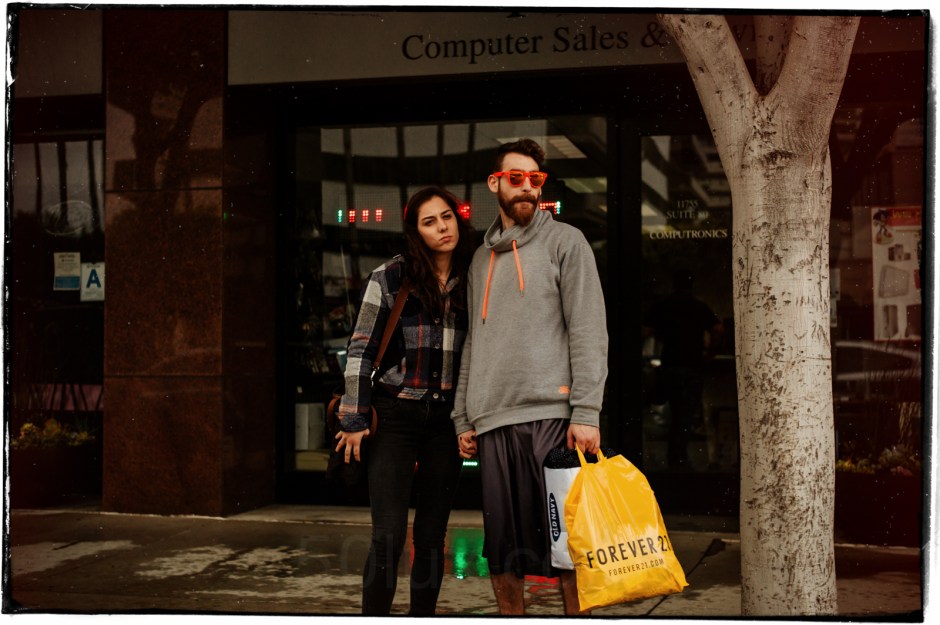
Untitled: Beverly Hills, 3/28/15

DSC00489-Edit

Ever So Slightly Crushing It

One day last year. At least I think so. I’m loving the ‘mosaic tile’ gallery option on WordPress. It only took me years to notice it. So I might go back to some of my older posts with lots of images and put them together in this new (ahem) and exciting way. 😉

Sharp Dressed Man 

DSC01484-Edit

Film Again! Sparks Media Day Shot with Leica M7, 50’lux, Kodak 800

Eye-Catching

DSC03554-Edit-2

Street Combo on Film

Photographers who refuse to abandon film

IMG_0986

donald barnat 50lux.com

VIA THE BBC:

Film photography was supposed to have been killed off by the digital era – but a committed band of enthusiasts refuse to abandon the traditional camera. Stephen Dowling finds out why for some, film never went out of fashion.

Photographer Patrick Joust spends a great deal of time on the streets of his native Baltimore, drawn to capture both the city’s residents during the day and the lamp-lit solitude at night. He does all of this on film.

“It’s the medium that works best for the kind of work I want to do,” says Joust, who often lugs three cameras around the streets, loaded with different kinds of film.

“These old cameras can disarm people and can be the starting point for some great portraits. There’s something more friendly about film cameras, even quaint, and I try and make that work for me.”

via The photographers who refuse to abandon traditional film cameras – BBC News.

Rodeo Drive, Beverly Hills, 4/12/15

DSC03155-Edit

A Really Good Photo Day

I used to shoot for an online sports publication and my boss, SportsPage Mike, had one rule for the photogs: bring back shitloads of pictures. This inevitably led to both disaster and triumph. Team media days, which aren’t (or weren’t) really about roving photogs capturing the day, could be especially difficult. None of that on this media day. Los Angeles Sparks 2008. I hope these world class athletes don’t mind me saying that they were also, on this day, a solid team of beautiful women. Wow! I say DAMN!

Happy Easter 2015!!!

City of Tomorrow

DSC09327-Edit

Throwback Thursday: Leica 35mm f1.4 Summilux FLE Review in Pictures

Outside the Whisky

DSC09148-Edit DSC09147-Edit DSC09149-EditDSC09145-Edit DSC09150-Edit DSC09151-Edit

Picture Perch

DSC07649-Edit-2

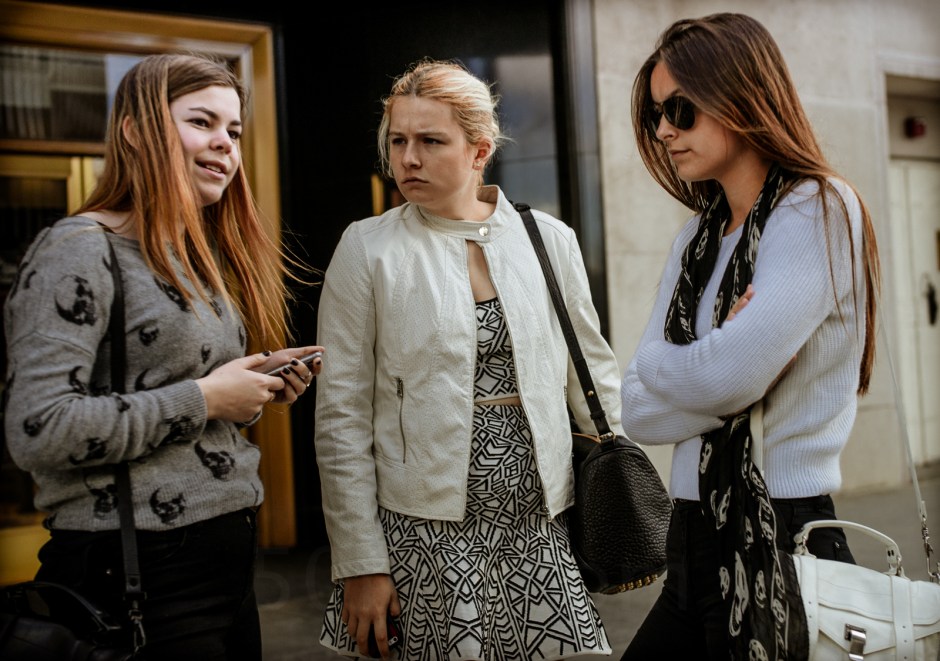
Street Style 2015: Wilshire Boulevard, Beverly Hills

DSC07673-2