photography

The Beguiling Light

Leica 35mm f1.4 Summilux FLE v2

First, the ‘Lux is back in my life, baby!

Let me tell you, it’s been very weird the last many years to have a website named for a lens that I no longer own. But those days are over. Sort of. You see, the latest ‘Lux isn’t a repurchase of the site’s namesake 50mm f1.4 Summilux. This ‘Lux is the 2022 release of the updated 35mm Summilux FLE v2 and we’re not going to change the name of this place over 15 silly millimeters.

No, the title of this piece is not a misspelled soap opera. It is, however, kind of my own personal photographic soap opera. But what you’re about to read here is also a master class in using a Leica M camera with fast glass. I promise you. Do not doubt me. 

Is it intended to be a master class for you the reader? No, I’m not that arrogant. But please partake freely nevertheless. It’s really meant to be a master class for yours truly. I have to write this all down now so that I never forget it. Ever. Again. Because I did forget it. I forgot everything I once knew about how to really use a Leica M. 

That occurred even though I’ve been using my M10 pretty much all the time the last few years. But I’m shooting street photography in daylight. I’m shooting with f2 lenses which are almost invariably stopped down to f5.6 on up. Or down. Whatever. Numbers go up, size of the hole goes down. That’s photography. 

Also, for the first time in my photographic life, I’ve taken to using Auto-ISO on both my Leica and Nikon cameras. Finally, at long last, that feature actually works for me. I shoot most often from a moving car. So I need fast shutter speeds. I can’t always focus at 35 MPH. So I also need small apertures. I think you get the picture. This is not Leica Summilux f1.4 shooting. And, while I wouldn’t call it brainwashing, shooting like this does have the tendency to condition someone to look at the process of camera settings as they relate to exposure in a certain light. 

It’s also not indoor low-light event photography, something I used to do quite a bit of. Not so much with Leica gear but, for my personal use, which included a lot of low light wide-open shooting, I pretty much shot only Leica for well over a decade. Even before I got my first digital Leica, the M9, in 2010, I’d been shooting film for a couple of years on a sugar sweet M7 and then later pairing that with an M6. 

I was lucky to be able to afford those Leica cameras, even used. But I couldn’t also afford actual Leica lenses, so I shot with a Zeiss 50 f1.5 Sonnar and a 40mm Voigtlander Nokton f1.4. 

When I got my M9, however, I wanted to shoot it with Leica glass so I picked up the tiny and quite remarkable 35mm Summarit 2.5. So I was set. Loaded for bear or whatever else. I could now shoot my Leica all day long, play games, experiment, it was amazing.

Just one week after picking up my new Leica digital kit I had to fly off to Chicago for a BIG TIME event, which included a pre-dinner the night before. But here’s the thing, I’d already been shooting Leica film bodies for a few years. I’d read and learned so many things. So I had this old archaic film mentality about exposure. I wouldn’t call it brainwashing but… 
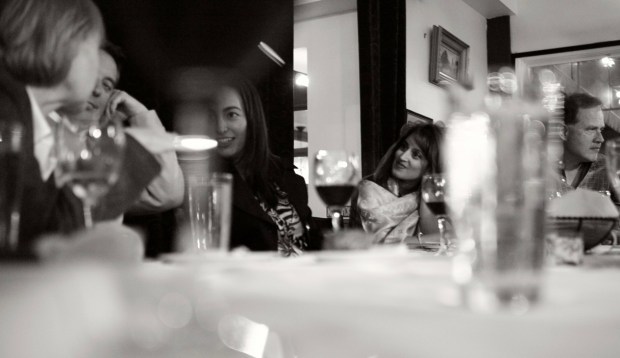
Leica 35mm f2.5 Summarit

I was ready. I already knew the M9 wasn’t great over 800 ISO. The widest aperture of that generation of the Summarit family of lenses was f2.5. Do the math. No matter where I was, I was going to need to shoot at very slow shutter speeds. I think I shot the entire weekend at 1/30th all the way down to a quarter of a second. 
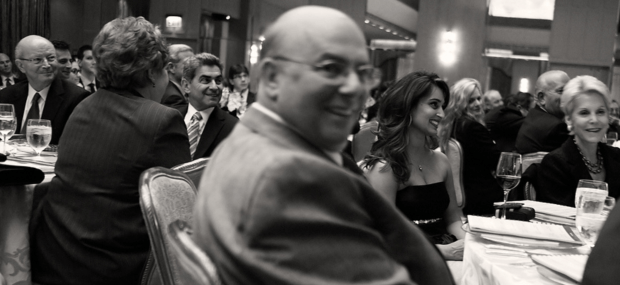
Leica 35mm f2.5 Summarit

The pictures I produced that weekend in Chicago were what I’d fantasized about making as I built my photographic dreams up from a young age. I’ve always said my photographic aesthetic is Cincinnati newspaper photographer. And these were mostly old-school photojournalism style shots with some occasional digital razzle-dazzle thrown in. I’d owned the digital Leica and lens for one week and yet I’d never done anything better, and, to this day, I’ve never been more satisfied than I was with the images I came away with from that trip. 
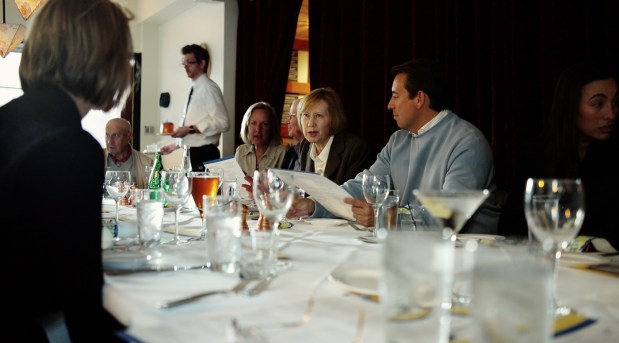
Leica 35mm f2.5 Summarit

Whatever I was thinking that weekend in 2010, however, whatever photographic strategy I was applying to the challenges of the events and the lighting and the various focusing distances and issues like camera shake, it was all lost from my mind a long time ago. My photographic instincts had been completely rewired many times over. 

For God’s sake, I’d even taken to shooting Auto-ISO. Need I say more?

Then came the new 35mm Summilux. Just a few days ago, but 15 years later. And, for the first time in like, forever, an event. And so, as you might’ve imagined, disaster surely followed. I pushed my ISOs into the stratosphere. I shot at 1/125th of a second. My mind had been rewired. Okay. Gloves are off. I had been brainwashed! 

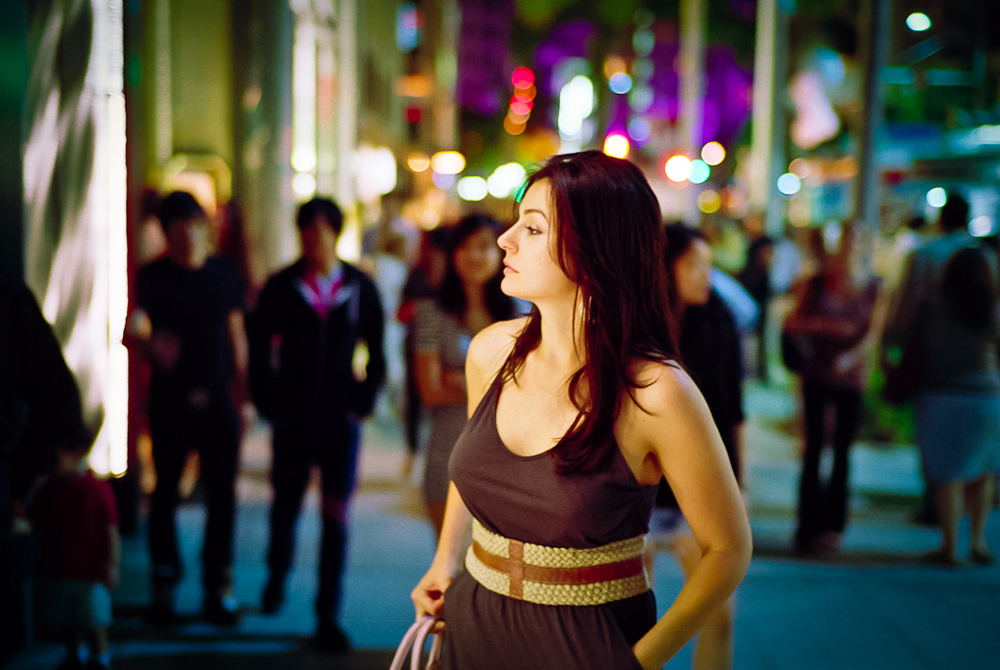
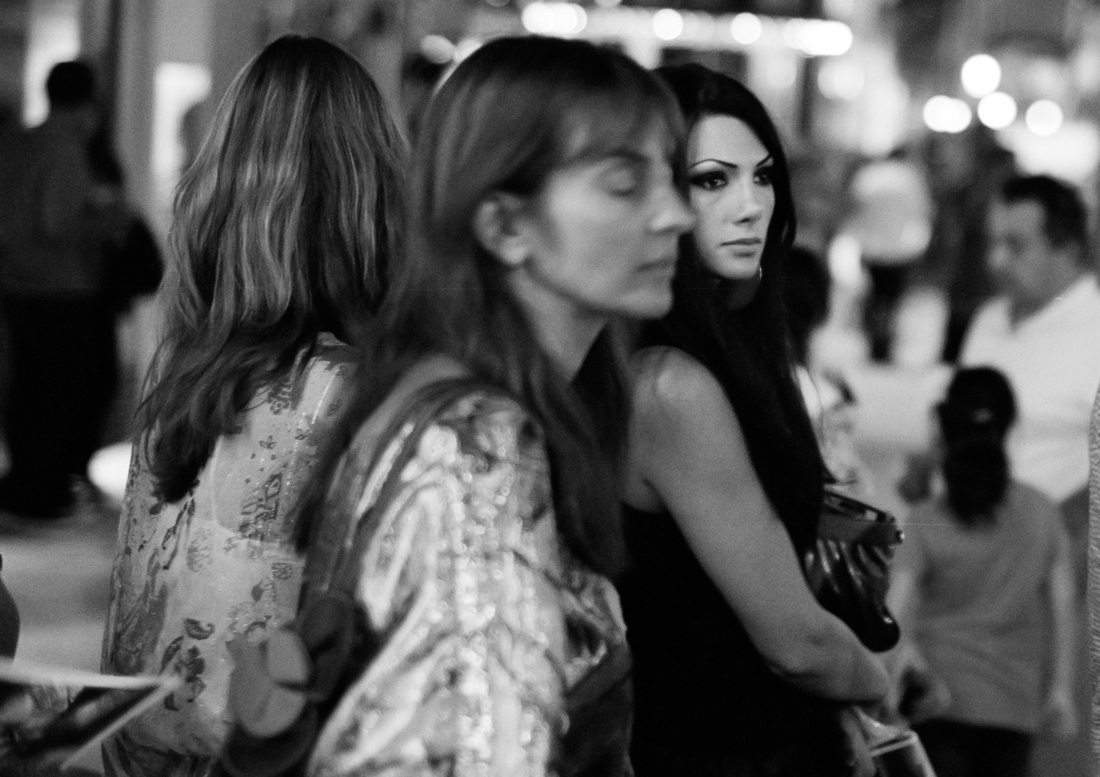
The lens itself is incredible. This is actually my second 35 FLE. I got my first in 2010, even before I was able to get my hands on the 50mm Summilux this website is named after. Same optical formula as the first FLE but maybe newer coatings push out wide open sharpness to the very edges. But the close focusing capabilities, on a 35mm lens? GTF out of town, people. Just go. Leave, right now. 

This 35 is a lifestyles photographer’s dream. 
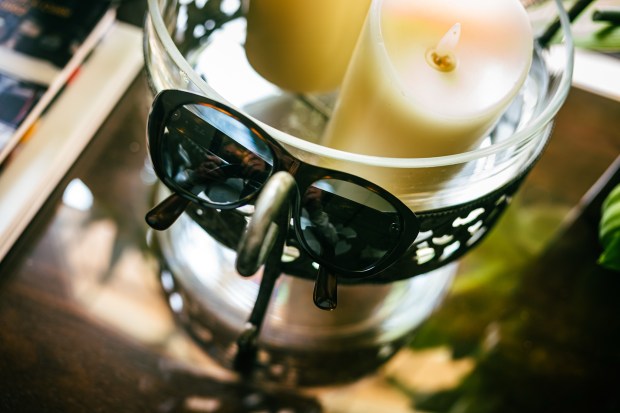
Leica 35mm f1.4 Summilux FLE v.2

But I didn’t know what I was doing. I didn’t have a clue. And when I got home I felt sick looking at my images. I’m not a professional photographer and I haven’t pretended to be one in years. But this event was personal. And stressful. There was a pro photographer working the room there and no one was even taking cell phone images. The atmosphere was elegantly reserved. Even if it is the same ballroom where they host the always wild and wooly Golden Globes Awards telecast. So pulling out even my tiny M kit was awkward at best and I only managed to grab a handful of frames. 

But enough of all that. Let the master class begin. 

The Master Class Begins 

In order to really know how to best use Leica M cameras, and fast lenses, you have to go back to the principles of the design of the M camera system and the minds that conceived of and continued to build on that design. Seriously. 

But first this…

We all know the exposure rule on focal lengths and shutter speeds. To avoid camera shake, it is best to shoot at shutter speeds no slower than the focal length number of your lens. So if you’re shooting a 35mm lens, for example, you wouldn’t want to shoot at a shutter speed below 1/35 of a second. 

But Leica is Leica for a reason. Many reasons. “M” bodies are flat and sit flush against the shooter’s face. The lenses are small. The center of gravity of the entire kit is mostly stabilized just by the act of bringing the camera up to your eye and holding it steady. 

So that old shutter speed vs. focal length rule. Forget it! That’s right. THROW IT OUT THE WINDOW. You can, for example, hand hold a Leica M body at half or less than half of your 35mm focal length and get incredible, even reliable, results! 

And I’ll add this. We’re always trying to replicate the looks of the film photography of yore. Right? Of course we are. Almost everyone uses filters on their cell phone pictures at one time or another to try to emulate the look of vintage photographs. 

So here is a stealth vintage photography pro-tip courtesy of the old pros. Slow shutter speeds. Creates an entirely different look than shots snapped at mere hundredths of a second. Who knew? And remember, this is actually how so many of those beloved vintage and historic shots were taken. So do the same thing the 20th century greats of photography did in order to take one giant step towards achieving similar results. Duh-UH! 

So let’s talk about the red dot. Not the one on the lenses. The one inside the viewfinder. You know what it’s there for, I’m not going to tell you. But think about what the minds who put it there were thinking when they came up with this idea. Think of what they created. A solid red dot tells us that, in theory, our camera settings have delivered to us a proper exposure. There are chevrons (arrows) that may appear pointing our index finger that is resting (hopefully) on the shutter speed dial in the exact direction we might want to move that dial in order to make that red dot solid if it isn’t a spot-on proper exposure. 

But unless we are just simply and dumbly shooting an object (which is often the case) we might not (even infrequently not) want a spot-on proper exposure. In some cameras, we might use exposure compensation to achieve something more or less than what the camera’s light sensor might consider to be a proper exposure. 

But not us and not with a Leica M. Because we have the red dot and the chevrons. Never forget that, my people. Never. Ever. (Pounds fist against forehead.) 

Think about what these 20th century Leica geniuses created with their M camera system. They gave us more than we know. 

Why, for instance, might the chevrons be even more important than the red dot? Well, how about this? What about when we’re not dumbly photographing mere objects? What if we’re photographing light? Which is, you know, what we’re actually doing anyway no matter what we think we’re doing. (I’m not going to go into the whole light thing as it applies to photography, but it IS a thing and it is a thing for a reason.) 

So what are the photographs that catch your eye and make you sigh with appreciation, even if only for a moment? What is the most charming aspect of any image? Is it the subject? Yes, it can be. But I’m going to tell you that that is rarely the case for me. I may be incredibly interested in the subject of a photograph. Or the scene or the decisive moment. But what makes me truly stop in my tracks when I look at an image is always the light. 

Natural light is king, especially as it is bouncing around indoors. Pictures of nothing important. Back lit objects. Reflections on a shiny floor. Doesn’t matter. We love the light. 
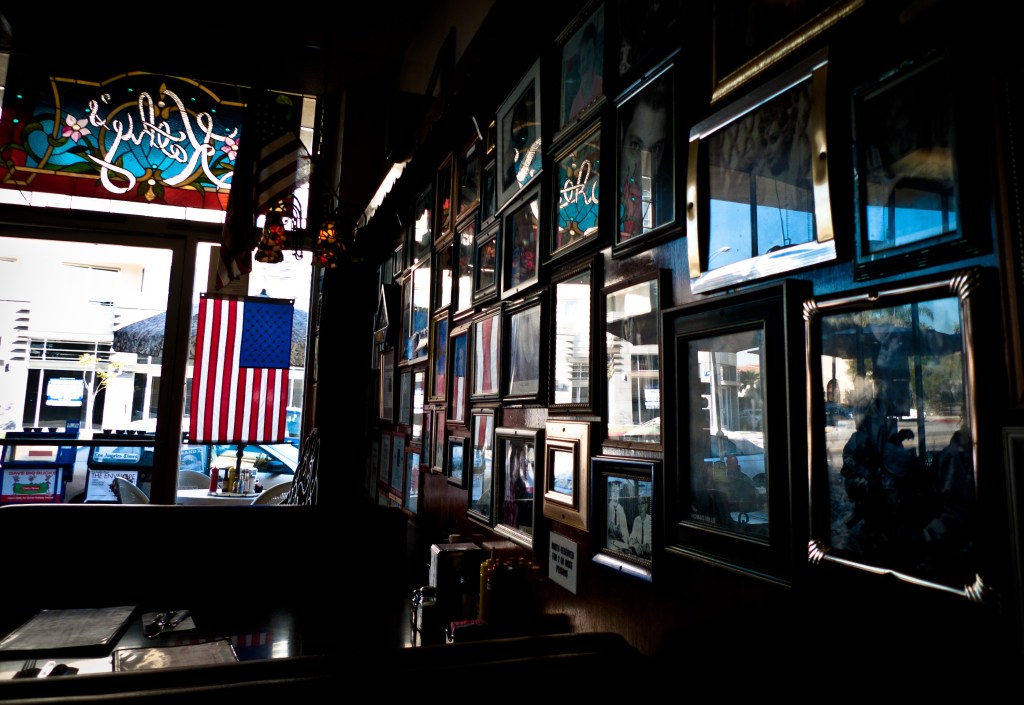
Nick’s Cafe, Pico Blvd (no more)

Dimly lit rooms with artificial lighting also offer many opportunities to make available light the charming star of your photography.
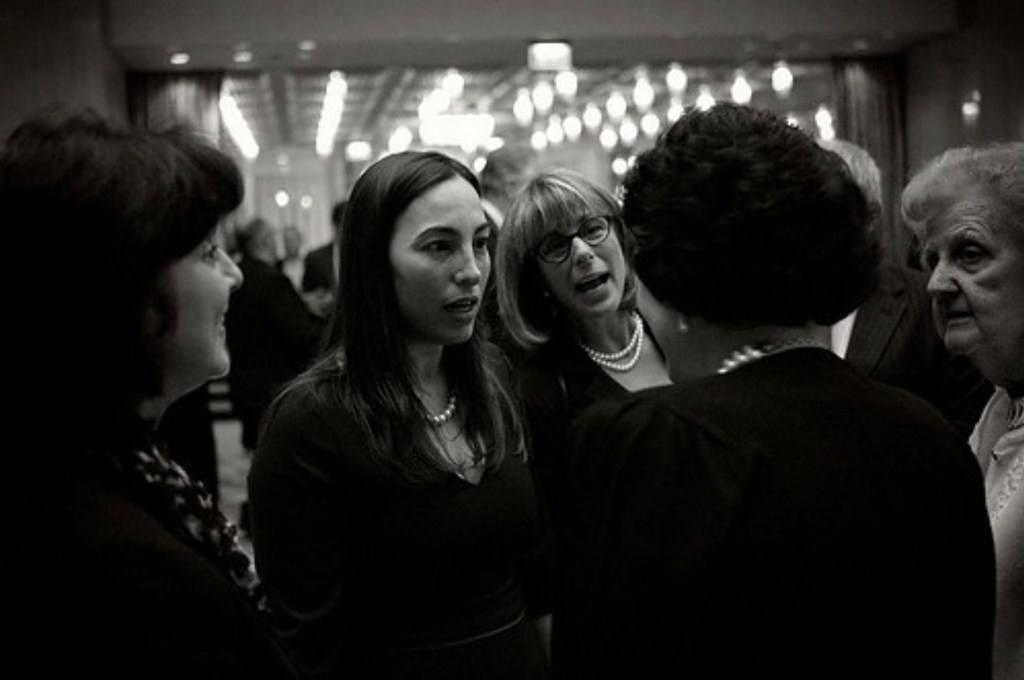
Leica 35mm f2.5 Summarit

And it’s not something you have to work all that hard to achieve. You just have to fully appreciate that the artificial light that is available to you, even dull uninteresting light that you might otherwise scoff at, IS nevertheless light, and that you simply need to adjust your exposure settings, as well as your mind, to take full advantage of that light. 

Not by boosting your ISO. 

But by slowing down your shutter speed. 

So here is the process… 

Okay, so maybe it isn’t THE process. Maybe it’s just my suggested process. Maybe I’m just talking to myself to try to make sure I never again forget the things I once knew. 

So you walk into a room. Or an event. You think like you’re living in the pre-digital days of film. Always. You look at the available light and you make a judgement on ISO. Again, think as if you’re deciding what film speed to purchase and put in your camera. Whatever decision you make, my advice is that it should be 1000 ISO or under. In the rarest of cases, you might push it to 1600. But just for a few shots. 

Yes, I’m fully aware of how good cameras have gotten at handling high ISOs here in 2025. I’m telling you to put all of that out of your mind. It is poison. If you’re shooting a Leica M with a Summilux lens you freaking idiot (talking to myself now) you are living in truly rarified photographic air with a different set of rules entirely. 

So you’re in your room, large or small, and you’ve looked at the light and ball-parked an ISO under 1000. (Hey, if it’s a sunny day outside and you have good sized windows you might be fine shooting at 400 or even 200 ISO. You will get GORGEOUS images.) You open your lens to its maximum aperture. Turn on your camera and look into the viewfinder. Look at the red dot and look at the chevrons as you scan the room. 

The only exposure adjustments you make at this point is with the shutter speed dial. Focus on something near the middle of the room. Take some shots. Adjust according to the chevrons and then against what the chevrons are telling you. Look at the images. Look at the light near the windows. Is it pretty? Or is it too much? Or is it too dark? Settle on a shutter speed that looks best to you and leave it there. For a moment. 

Then take more pictures of other things around the room. Notice you may have to slow the shutter speed down even more for objects further away from the window. Hold the camera steady against your face and keep in mind always that you don’t have to worry about shooting a Leica body with a 35mm lens at single-digit shutter speeds. JUST DO IT!

Get used to this process. Try to hard wire all of this into your brain as option numero uno when shooting fast Leica glass in available light. Make it second nature. Set an ISO for the environment you’re shooting in. Open the lens up all the way. Go as slow as you need to with the shutter. Rinse and repeat for as long as you shoot Leica. 

I’m not trying to be a snob here. But this is a piece about how best to shoot a Leica M body with ultra-fast glass. If we can apply any of this to other camera systems–as I’m sure we can–then go for it. Please. A lot of this is just a basic old-school photography approach (my own) from before we had the capability to change ISOs at will or check our results on an LCD screen. 

So I ask you to think about what Leica has given us, even here well into the 21st century. 

They’ve given us an amazingly exquisite playground that exists in our minds, in our eyes, and in our hands. 

The most beguiling thing in any photograph is the light. Always. Light is the magical mystery of the universe. Man did not create light. Could not have invented it. Leica M cameras, like no other photographic product ever created, give us the opportunity to explore that universe and to play with the magical mysteriousness of light. 

If you don’t know that, I promise you will learn how true it is by simply following the process I’ve suggested in this piece. See the light, play with it, and photograph it. 

And, please. Never forget how to do that. 

I’ve only had the new 35 FLE for three days so all the images below were taken with the first (2010) version.
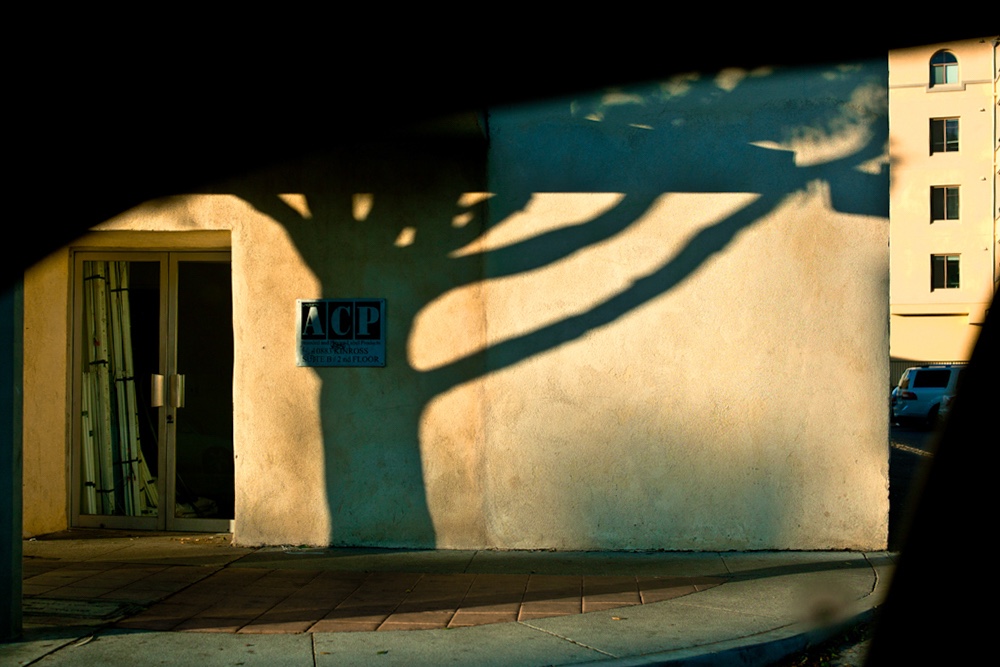
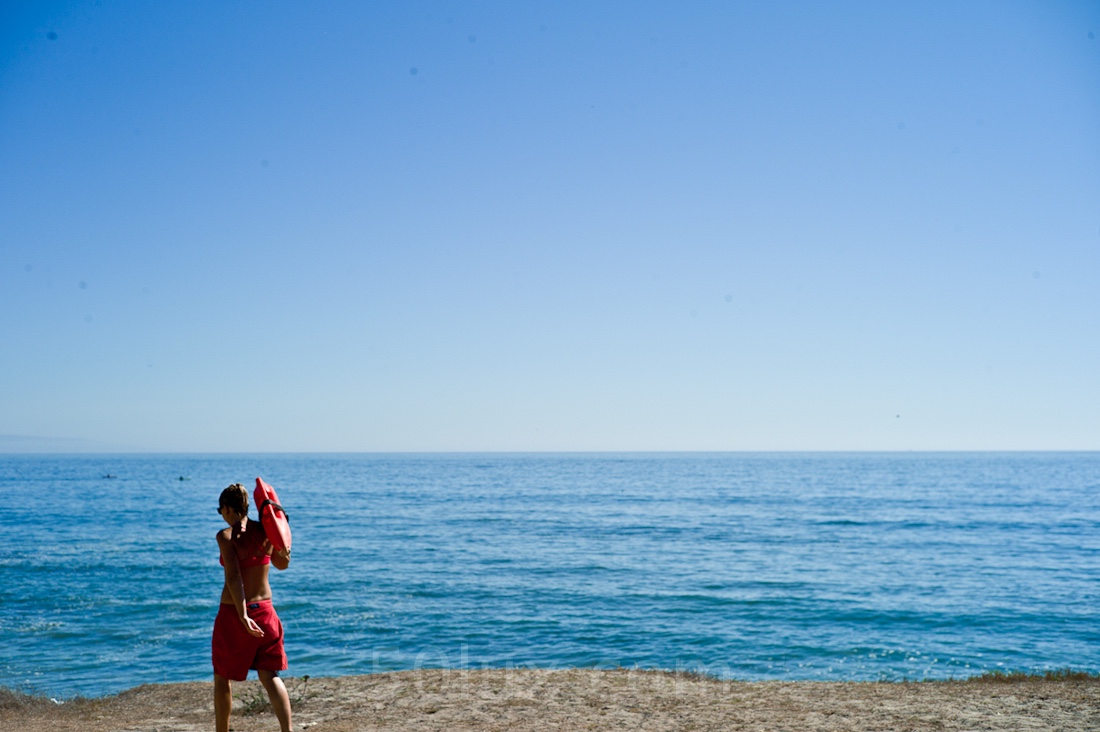
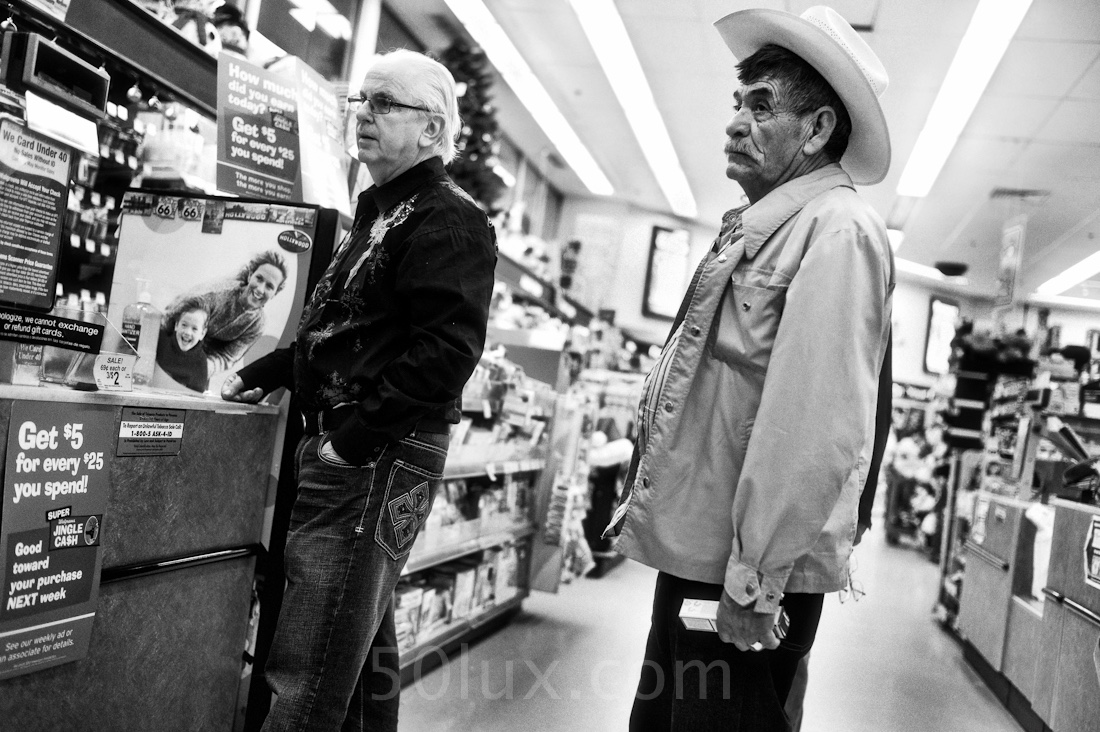
P.S. I officially no longer know how to use WordPress to post images. I don’t have any idea why my shots here appear to be so soft. They’re not soft and they’re certainly hi-res enough for this website. Let me add to the voices who have bemoaned the many changes to the user interface here. I think this has severely impacted my desire to post on 50lux.com.
Nikon at the Playboy Mansion

To mark the passing of Hugh Hefner I’m reposting this from years gone by. RIP Hef. Lord knows you’d need some rest by now. 😉

So let me tell you the story.

I get a call from a BET producer on a Friday night asking if I can go shoot an event for her at the Playboy Mansion the next night. It might come as a surprise to most people but the Playboy Mansion is the site of innumerable charity functions. I’d been up there before. Swam in the grotto pool. Blah blah blah.

But never, slow my rapidly beating heart, had I ever been there with a camera and a press credential.

So of course, I say yes! The problem, however, is that at that time in my life my health was absolutely miserable. So when the next day dawned blisteringly hot, I was both sick and apprehensive.

To get to these things at the Playboy Mansion you have to shuttle over. Actually they’re full-sized buses and you usually depart from a giant multi-level parking garage somewhere else on the Westside of Los Angeles. That was the case when I had my significant and dubious girlfriend of over three decades drop me off at the parking garage.

And I was still feeling very bad. And it was hot as Hades. I gave her strict instructions to be ‘on call’ cell phone on because I knew there’d be a long wait in a smothering parking garage and that I’d probably bail even before the first bus departed.

That was at 5:00 pm west coast time. Girlfriend didn’t hear from me again until near 1:00 am, when she found me lying on the sidewalk where she left me, drenched in sweat, with an absolutely stupid semi-permanent smile plastered on my half-crocked visage.

Yes. I was there a LONG time. I went through three or four different types of event photography all in one night. Red carpet. Long lens daylight candids. Available lowlight shooting. Standard event flash photography with the SB-800 and the 24-70 f2.8 Nikkor.

Lot of great stories. Met a lot of great people, believe it or not.

A pair of young female reporters for an online publication that covers charity events hooked up with me on the bus over. I guess this is when you know you’re getting old and harmless as a guy and maybe just a little pathetic. For a lot of the evening one of the very nice young women carried my heavy camera back pack around for me. Are you kidding me? Nice girl, definitely not from L.A.

At one point in the dusky part of the early evening, after sundown but when there’s still some light in the air, and of course there’s plenty of lighting at the event, a heavily geared up Canon shooter came up to me while I was shooting with the 70-200 f2.8 Nikkor. This is in the early days of the D3. He was very irritated with me for some reason and he says, “You know you’re not getting anything with that lens in this light?”

That was right around the time the picture at the top of this post was taken. And this one.

I’m linking to a Flickr slideshow of the images that ended up being used not by BET but another publication. They might appear a little soft in the slideshow as they are only 800x on the long end. It’s the entire gallery of ‘safe’ images.

But I’m also including below a definitevly NSFW slideshow of images that have never been seen by anyone but myself. These are of body-painted girls and when I say NSFW I really mean it! These are not your father’s body-painted naked girls here.

It’s the Playboy Mansion. What’d you expect?

This slideshow requires JavaScript.

What We’re Talking About When We Talk About Light

Apologies to Raymond Carver. Reposted from the early days of 50lux.com

Leica M9, 35mm f/1.4 SUMMILUX-M ASPH FLE

I think of the best stuff when I’m half asleep. It’s called hypnagogia and I’ve got a bad case of it. I’m not alone, apparently, as a New York Times article pointed out late last year and as Wikipedia establishes as encyclopedic fact.

Many other artists, writers, scientists and inventors — including Beethoven, Richard Wagner, Walter Scott, Salvador Dalí, Thomas Edison, Nikola Tesla and Isaac Newton — have credited hypnagogia and related states with enhancing their creativity.

I’m intending to capture some of these fantastic creative thought processes that trot through my mind when I’m half asleep for the purpose of bringing them back alive and showing them to the world here on 50lux.com. It won’t be easy. Not many things are when you’re half asleep. Nature of the beast. More on all this later. But let’s start off with an example from today.
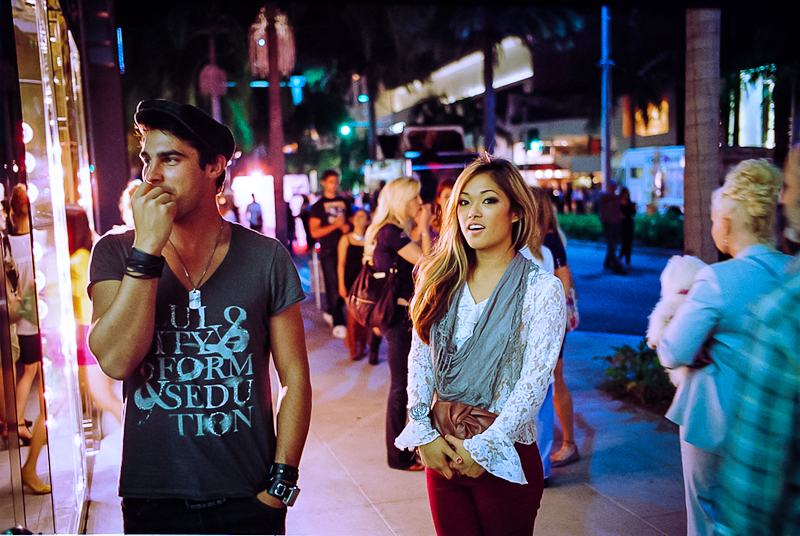
There’s nothing more annoying than some snobby-sounding photographer going on about Light. I chase after the Light. I live for the Light! I’m always out looking for the Light. I’m a Light chasing stalker of the Light.

Light, that fickle temptress, has taken out a restraining order on me!

You know the type. Butterflies and rainbows all around them. They shoot Leica but, of course, they could do just as well, maybe better, with a piece of cardboard and a tiny hole punched in it for a lens.

Never mind too the 14-year old future supermodels that seem to prance through lush meadows all around them, stopping only for the occasional extreme closeup on the sun-speckled perfection surrounding bee-stung lips.

What does any of that matter?, the light snob would say. It’s all about the Light!

Okay, let’s go there. Because as annoying as these people are, they just might be on to something. Pictures might lie, but not that much when it comes to the role of light making a great picture.

First let me say that my goal here, because I want to help myself to be a better photographer, is to learn along with anyone who happens to be reading this blog. So that some day, some glorious sunshiny day, we might all be just as annoying to others as these people are now to us.

It is important to have goals. Let’s get to work on achieving them.

Leica M9, 40mm 1.4 Voigtlander Nokton

Think of the world not as a place made up of things or solid objects to be photographed, but instead as a place where light exists.

You see what I’m talking about when I’m talking about half-asleep thoughts? Thank you and good night, ladies and gentlemen. Let me repeat it.

Think of the world not as a place made up of things or solid objects to be photographed, but instead as a place where light exists.

Because light in an infinite number of variations certainly does exist in this world. It shines down upon, through, wraps around, bounces off, backlights, highlights, dapples, washes over, peeks through, reflects off of, illuminates, obscures, virtually everything in this world and all of that enters into our consciousness, or DOESN’T, which is what we’re trying to correct here, through our eyes and through our lenses onto the plane of film or sensor we’re using to capture it all for posterity.

Light has so many different colors and shapes and effects upon whatever it touches or is near that it’s far beyond the scope of this blog post to even go into any of that. And it’s not important for the ideas that I’m trying to solidify in my own creative mind to try to address any of it at this time.

This post here on 50lux.com is more about what we all can maybe derive or benefit from in the form of an internal tweaking of our perspectives on light as it exists all around us and in our photography.

The important thing to keep in mind about light is that it can be as easily photographed, and as easily sought out as a subject to be photographed as a flower, a snow-capped mountain, a beautiful woman, or anything else that people almost instinctively point their cameras at before hitting the shutter release.

As you probably remember, like me, from reading it somewhere, whenever you take a picture, you really are only photographing reflected light anyway. Why not make a concerted effort on light’s behalf?

So now try it! Go out and, instead of looking to photograph mere things, solid or liquid objects of the Earth, as an ongoing exercise for your photographic eye and mind look past all that stuff and look only for light, wherever and in whatever form that you find it. Take pictures of that light. Make pictures from it.

Leica M9, 50mm f2 Summicron-M

If you’ve ever asked yourself or anyone else what’s the best way to radically change how you see as a photographer, then this is what I would suggest. Stop looking for and at everything around you as subject-objects, and instead allow yourself to look for and see only light.

Forever?, you might be asking. No. And then again, YES! Absolutely. Because we are talking about change here and hopefully permanent change. Some of us are always looking to change or open up our vision as photographers.

For now I suggest maybe working without your camera and going through your day looking past objects and people that you would normally focus your attention on and trying to see only the light and thinking about what you’re seeing wherever you do find light.

One of the first things you will discover is how incredibly easy this all is. You’ll be surprised. The change will be immediate. Your nose, as a photographer, will start to rise up into the uppity upper air involuntarily as you yourself become yet another annoying light snob. Phrases like I seek light wherever I can find it will roll off your tongue with the same highbrow snobbery of Grace Kelly in a 1950s Hitchcock film.

Go for the light and don’t come back empty handed!

Leica M9, 40mm 1.4 Voigtlander Nokton

Help The Los Angeles Center of Photography Improve Kids’ Lives! 

Photo by Julia Dean

The Los Angeles Center of Photography has applied for a $100,000 grant to help teach LA’s Boys & Girls Clubs photography. To win the grant requires votes from friends of both photography and kids!

More from the LACP:

There are 51 proposals in our category and right now, we’re in 20th place. We must be in the top 10 for a chance to win. (The committee selects the winner from the top 10.) Our proposal outlines a yearlong photography program in LA’s Boys & Girls Clubs. The grant is meant for non-profits with projects that will help create a better LA, now and in the future. VOTING ends on November 3.

PLEASE VOTE!!! It will take only five minutes. Here is how to do it:

1. Go to: http://www.LA2050.org

2. Hit the hot pink tab that reads VOTE IN THE MYLA2050 GRANTS CHALLENGE

3. Choose a Submission Category (Our proposal is under CREATE)

4. Now you have to sign up. Signing up is easy. See the top right corner of the LA2050 home page, where it reads, “Join.”

5. Then find our project (you will see a picture of me in a classroom with the Boys & Girls Club kids) and VOTE for LACP’s proposal!

6. You will then get an email confirming your vote. (This may take up to an hour to get this, so don’t fret.) You have to click on the link in this email to confirm your vote.

More on the proposal from Julia Dean:

About our proposal: I set up the curriculum and began our one-year program at the Variety Boys & Girls Club in Boyle Heights on Jan. 14, 2015. I teach every Wednesday afternoon. We have completed the basic, portraiture and street shooting class so far. The documentary class began last week. The plan is for each boys & girls club to document their own community and exhibit the work at LACP. Our first exhibit — from the Variety Boys & Girls Club — will take place in February 2016. There are 26 clubs in LA County. We hope to implement our program in all of them, once we raise enough money.

Source: Help Us Improve Kids’ Lives. Please Vote for LACP!

Throwback Thursday AGAIN! — Fashion’s Night Out 2011 in Beverly Hills

Getting back to some Leica photography. The date has been announced for the annual Fashion’s Night Out 2012 and it is September 6th.

Sooo… this entry today here at 50lux.com has a triple purpose.

First, I would like to give Leica and other lowlight shooters a heads-up to the coming FNO extravaganza, Vogue Magazine’s world-wide phenomena and to let you all know that this very impressive event is probably coming to a city somewhere near you.

It’s an incredible opportunity to get out and photograph great style and beauty and all in the vibrant colors and exact low-light conditions where our super-fast Leica glass really shows its stuff.

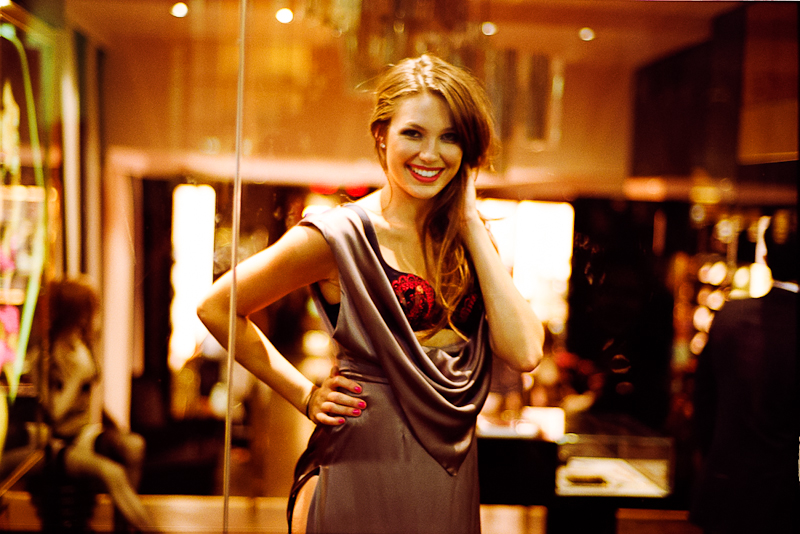
Second, of course, I want to showcase my own humble efforts in that regard from last year. All the images you see here were shot on film, with my trusty M7. Mostly with a Zeiss 50mm Sonnar f1.5 mounted, but there’s more than a few with the Leica 35mm Summicron 2.0 ASPH. Also shot mostly Kodak 800 Ultramax film but I also put a couple of rolls of TMAX 32oo through the M7 which I will post in a few days.

But now, and thirdly, I’m also going to turn my attention to a gentle constructive review of the event itself with the hope that this critique will find whomever might be in the organizing group planning this year’s festivities in Beverly Hills, where the FNO event I attended took place. You’ll get an idea of why I would want to get this into their hands if you read on.

Okay, right up front I should say that my attending last year’s Fashion’s Night Out in Beverly Hills event was for the sole purpose of shooting some frames of fast film with some even faster Leica and Zeiss glass mounted on my M7.

But I’m a critical sort. So in between trying to catch some of the most beautiful women I’ve ever seen in my camera’s viewfinder, I did manage to cast a critical eye towards the event itself.

First, I think it’s a great idea. I’m a photographer. I love beauty and fashion. I have no connection, however, with the beauty or fashion industry as a photographer, or in any other way except as a admiring male who doesn’t leer from behind a camera.

Much. Come on, I am perfectly capable of taking a great picture of a beautiful woman without leering. In theory.

Anyway, I didn’t attend the event in 2010 so I have no reference point to compare 2011 with the previous year. But I was surprised at how little there was actually going on at this event on the very premier boulevard of shopping and fashion: Rodeo of Beverly Hills.

Leica M7, Zeiss 50mm Sonnar 1.5

Not to be overly critical, but I expected many small continuous fashion shows outside of some of the major trendy stores. A little more effort from the big fashion houses. An appreciable media presence. A few big names.

Pretty much nothing like that here. There was a set up for a fashion show, so maybe I was late. Got there at 8:00 and the event was scheduled till 10:00. Stores were pretty much an indoor thing, just like any other day. Except this was night.

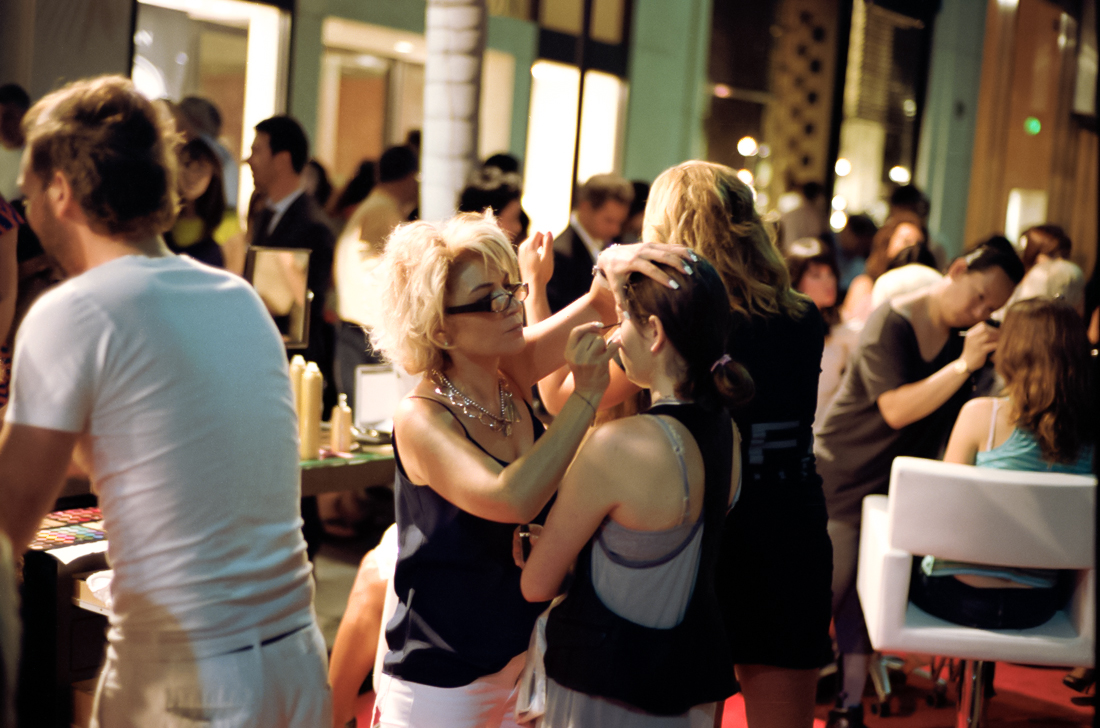
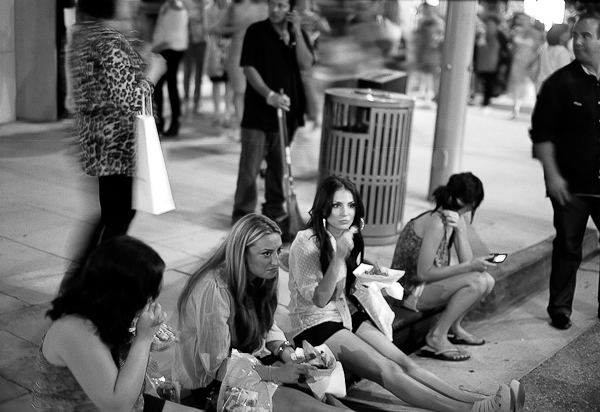
There was a makeover area which was certainly busy. A street portrait artist working in charcoal, I believe. Food was supplied by a handful of not very interesting food trucks. People were lounging on the curb eating.

At one or two of the stores, there was an actual doorman allowing entry to only, I supposed, an invited few. Nice touch there as some pretty fancy Beverly Hills wives were turned away. Ouch. I have pictures of that.

I’m sorry, BH. I just think this is a great idea that should be done with a little more attention to class and detail and results. The number of people in attendance clearly demonstrated that there is an appetite for this type of event right there on Rodeo Drive.

Come on, Beverly Hills, you can do much MUCH better than this.

That said, please enjoy the pictures.

db

Leica M7, Zeiss 50mm Sonnar f1.5, Kodak Ultra 800

LEICA M7, 35mm Summicron-M 2.0 ASPH

Leica M7, 35mm Sumicron 2.0 ASPH

Leica M7, Zeiss 50mm Sonnar f1.5

Click on these last two shots for larger versions.

Leica M7, Zeiss 50mm Sonnar f1.5

Pictures: Do you take them or make them?

Leica M9, Voigtlander 40mm f1.4 Nokton

THE REBLOGGING CONTINUES UNABATED! This from a few years ago.

Honestly, I’m not sure there’s two opposing camps out there. I think the way it usually goes is some poor unsuspecting chap says he likes to take pictures… and then, invariably, someone wearing a much more expensive watch says he doesn’t take pictures, he makes them.

Ah-HAH!

Then the first guy smiles and shrugs and says yes, of course, and then looks at his feet. The party’s over for him. He doesn’t even know what the other guy is talking about.

Make pictures? What does that even mean? What’s the difference between taking a picture and making one? Are they really two different things? How come I don’t know this?

The reason he might not know it is because there are so many instances in life where others hang onto information as if it’s a proprietary asset. Or, just as likely a theory, as long as I’m casting aspersions, they can’t really explain it themselves even if they wanted to because they themselves don’t know.

Ansel said it. That should be good enough for everyone. Right?

The truth is, making and taking a picture are really two different things. What the annoying snobby person (a recurring character on this blog) may not know is that, believe it or not, both are important approaches to photographing and it’s important to know the difference and to be able to execute on either at your discretion as a fairly decent photographer.

Simply put, you MAKE a picture when your eye selects a subject or scene and you can envision how you want that picture to appear in a photographic image and then you set about the business of positioning yourself and your camera, deciding areas under your control such as the aperture and how it will effect depth of field, for instance, as well as principles of composition or how you might use exposure, the balance of light and shadow, and an almost infinite number of other variables that will allow you to achieve the image that you’re envisioning as an end result.

Almost everything is riding on you. Your desired outcome will come about to your satisfaction only if you can execute and control the many decisions and results that represent your own vision for the image.

It’s an important basic concept to be aware of as a photographer and you can cement the processes involved in making images as opposed to taking them into your mind by repeated practice or application. After you’ve ‘made’ a half dozen great images of things as banal as the folds and polka dots on your shower curtain you’ll understand the concept of making an image as opposed to taking one.

But as you have probably already figured out, this is just one approach or thought process of photography and there certainly are countless instances where great photographers producing iconic images were not and are not engaging in anything approaching such a carefully thought-out creative process in the capturing of their images.

In fact, and apologies to Ansel Adams, I would suggest the vast majority of photography’s most famous, memorable, or iconic images were not made in the sense that they were envisioned, preconceived, thought about, prepared or set up for, or any of the many actions that a creative photographer might go through in an effort to make an image.

This is probably best explained with a picture, which is, the last time I bothered to check, still not really worth a thousand words.

Sao Paulo, Brazil. 2006. Women’s World Championship of Basketball.

Team USA has just lost a game in international competition for the first time in 14 years. Since international amateur athletic bodies that govern things like world championships and the Olympics changed the rules that prohibited professional athletes from participating, allowing for the creation of ‘dream teams’ made up of the best professional players in a given sport, the United States had dominated the world in women’s basketball.

But the scrappy (and photogenic) team from Russia found a way to do what no one believed even possible; literally beat the Americans at their own game.

So a bunch of baseline photographers are under the far basket after the historic loss. Some of us, the Americans I’m guessing, are shocked and more than a little bit angry. We all came a long way to shoot the United States winning a world championship.

We’re all looking around in confusion and as the Russian post-game celebration extends beyond a polite 30 seconds or so, it seemed that most of us had gotten all the shots we needed of this sacrilegious demonstration and we’d gone back to mostly arguing about who screwed the pooch harder, the US players or coaches.

After a while, in any group or pool of photographers covering an event, there’s this group-think that seems to occur. We all know what we’re there to get, and I think some of us can get a little self conscious if we’re the last photographer still grinding away at our shutter’s life expectancy at eight frames per second shooting at essentially the same scene. You don’t really want to be that guy. What is that clown doing? You mean you haven’t gotten one in focus YET?

But then I saw something. Something was added to the scene. Instinctively I raised my Nikon D3 with the 70-200mm f2.8 Nikkor VR mounted and took this shot.

Nikon D3, 70-200mm f2.8 Nikkor VR

I will tell you without question that it is my firm opinion that if women’s basketball and the exploits of our US national team in international ball were a big deal in this country, as big of a deal as say, NBA basketball is in America, then this image would have been an iconic capture.

It’s Diana Taurasi, then and probably now the best women’s player in the world, dejectedly walking by as the ecstatic Russians carry on the celebration of their incredible upset of a team made up of the best professional and amateur women ballers our country could produce. Something that hadn’t happened, as I pointed out earlier, in 14 years.

I know you could argue that I somehow made that image, and that’s fine. My mind recognized the opportunity and blah, blah, blah. Yes, I was prepared to shoot that moment. But we’re all as photographers in a constant state of preparation.

The truth is, I took that shot. And the further truth is, I seek to take shots a lot more than I set out to make shots.

I wrote this article because I think I understand the difference between the two and can explain it. I also wrote it because I’d like to change as a photographer. I can take shots. I’m very good at it and I want to continue taking them whenever the opportunity arises.

But I want to spend a lot more time in the future of my photography making images. This blog entry will be, I hope, a major step forward for me to focus my attention onto an approach to photography that I’ve often neglected.

You don’t really know something, it is said, unless you can explain it to others. And I sincerely hope this piece is as helpful to me as it might be to anyone reading it.

db

P.S Here’s another women’s basketball shot that this time I apparently, in spite of myself, somehow managed to make.

P.P.S. This article was originally published here on 50lux.com June 10th, 2012. I could (and probably should) just reblog these old articles, but they don’t display quite the way I would like them to so I don’t. I guess I don’t quite see the harm in doing it this way.

Nikon D3, 24-70mm f2.8 Nikkor

Photographers who refuse to abandon film

IMG_0986

donald barnat 50lux.com

VIA THE BBC:

Film photography was supposed to have been killed off by the digital era – but a committed band of enthusiasts refuse to abandon the traditional camera. Stephen Dowling finds out why for some, film never went out of fashion.

Photographer Patrick Joust spends a great deal of time on the streets of his native Baltimore, drawn to capture both the city’s residents during the day and the lamp-lit solitude at night. He does all of this on film.

“It’s the medium that works best for the kind of work I want to do,” says Joust, who often lugs three cameras around the streets, loaded with different kinds of film.

“These old cameras can disarm people and can be the starting point for some great portraits. There’s something more friendly about film cameras, even quaint, and I try and make that work for me.”

via The photographers who refuse to abandon traditional film cameras – BBC News.

From Smartphones to Museum Walls – NYTimes.com

LENS AT NYTIMES: While some professional photographers might grow nervous at the idea of Instagram users taking over a museum, Mr. Kuster said people should embrace it. “There is an amazing movement that’s happening in photography,” he said. “There are so many great and talented people who are finding their voice.”

via From Smartphones to Museum Walls – NYTimes.com.

Seeing Halloween, as if for the First Time – NYTimes.com

The photographer who calls himself Joey L., 24, grew up loving Halloween he dropped his last name to avoid association with a “cheesy ’80s actor” who shares it. As a child in rural Ontario, Canada, he made his own costumes. The goal, he said, was to be as scary as possible. “My dad was an antique restoration guy, so we made all these freaky prostheses and wounds,” he said. “Demons and weird stuff.”

via Seeing Halloween, as if for the First Time – NYTimes.com.

New York Times: Photography as a Balm for Mental Illness

image0003

donald barnat – 50lux.com

Seems that maybe there is, in this eye-opening piece on NYTimes.com, a blurring of the lines between what is thought of as mental illness and what might be considered emotional or other behavioral problems and issues. But nevertheless I’m glad they cast a wide enough net to include many of us and I’m thinking this might be a very interesting ongoing subject to discuss here or amongst any group of creative people.

(I didn’t feel comfortable using an image belonging to one of the photographers profiled in this article without permission so I used one of mine. It is in no way a commentary on nor are the subjects pictured in any way associated with this article.)

To the casual observer, Danielle Hark was living an enviable life, with a devoted husband, a new baby and work she enjoyed as a freelance photo editor. But she was so immobilized by depression that she could barely get out of bed. Her emotional state could not be explained in postpartum terms — she had suffered from debilitating depression for most of her life, and ultimately received a diagnosis of bipolar disorder when her daughter was a year old.

via Photography as a Balm for Mental Illness – NYTimes.com.

30 women photographers under 30

30 women photographers under 30 - Telegraph

”Look at any advertisement for a new camera, you will usually see the kit held by a male hand, with the image of a young woman visible through the lens…as though the camera were always meant to be a male eye, gazing out onto a world of female subjects. It may sound primitive to talk of the female photographer in such a way, but as the photographers of 30 UNDER 30 will undoubtedly profess, resistance – or discrimination, even subtle – can be common even today. We will each have our own stories of how being a woman has hindered, or even unfairly aided, our pursuit of this profession.”

Compiled bChiara Palazzo

30 women photographers under 30 – Telegraph.

New York Times: Classic Lensman, Using Full Palette

Perhaps the greatest revelation provided by “Capa in Color” is not that Robert Capa, best known as a war photographer, shot in color film. It is that he shot in color frequently, honing his technical facility and trying to get the work published in magazines that began printing color photographs in the late 1930s.

via ‘Capa in Color’ at International Center of Photography – NYTimes.com.

Ventura Girl

venturagirl-Edit-2-EditOne from the very old pre-Leica days.

I Prefer To Make My Arguments in Pictures

20140119-L1042298-Edit

I’m a notoriously long-winded writer. Believe it or not, it’s true. And when I say notorious, I’m not kidding or exaggerating. I could bring 200 people who know me online here to attest that for most of the last 20 years, in our circle, I have been known as the KING of long-form internet diatribes.

I thought I’d be continuing that tradition here on my own damned blog, but curiously, that hasn’t been the case. And I have so much to say about photography. You have NO idea precisely how much I have to say about photography. But with every example I see of some other blogger pontificating about photography I’m driven deeper and deeper into a shell that, believe me, NOBODY knew I had. Except me.

I’m not minding it at all though. I’m having a ball. I feel freer than I have in many decades. I’m feeling that my street photography is in a pocket right now. I’ve never been more in control and capable of producing exactly what it is that I want to produce with my camera. Yes I want to do many other things this year with my camera and without it but right now I’m extremely content to communicate my vision through the street photography images that I’m making and showing here.

Thank you for visiting and I hope the trip here is more often than not worth your trouble.

db

What We’re Talking About When We Talk About Light

Yet another re-blog. This one is different because… it’s the first time it’s ever been re-blogged! How unique that makes it among my re-blogged articles. 😉

donald barnat's avatar50'Lux

Apologies to Raymond Carver. Reposted from the early days of 50lux.com

I think of the best stuff when I’m half asleep. It’s called hypnagogia and I’ve got a bad case of it. I’m not alone, apparently, as a New York Times article pointed out late last year and as Wikipedia establishes as encyclopedic fact.

Many other artists, writers, scientists and inventors — including Beethoven, Richard Wagner, Walter Scott, Salvador Dalí, Thomas Edison, Nikola Tesla and Isaac Newton — have credited hypnagogia and related states with enhancing their creativity.

I’m intending to capture some of these fantastic creative thought processes that trot through my mind when I’m half asleep for the purpose of bringing them back alive and showing them to the world here on 50lux.com. It won’t be easy. Not many things are when you’re half asleep. Nature of the beast. More on all this later. But let’s start off…
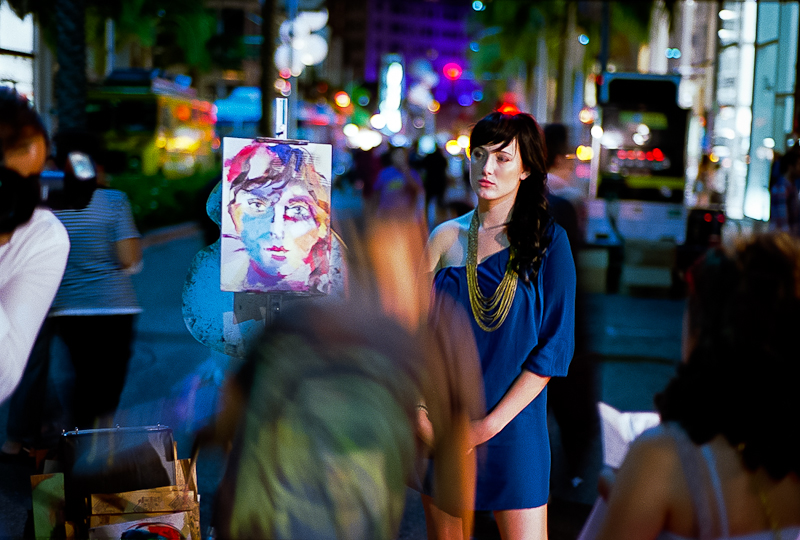
View original post 860 more words

Proof of Heaven

20131019-L1033004

Okay, the thing is, it’s here on Earth and it’s just for some lucky guy down in Laguna Niguel, Orange County, CA. But there it is. And we can all experience heaven vicariously through him, right?

Actually, I’m pretty much in heaven shooting this Leica 90mm Elmarit 2.8. Oh yes I am. This image above is actually a crop of the one below.

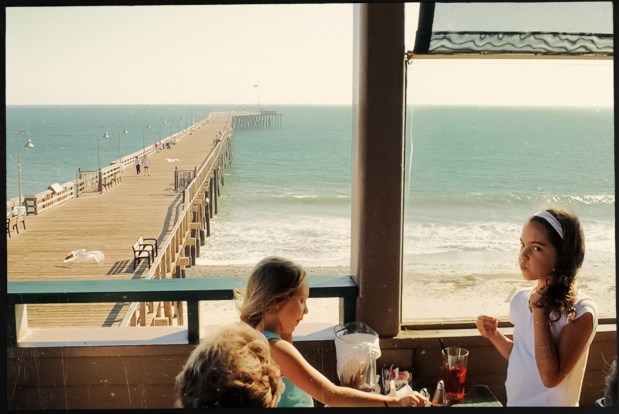
Now I could have cropped to the blonde in the thong. Yes, she is blonde and she is wearing a thong. Then many of you would probably be in heaven for a moment or two. But you’d hate yourselves later and I wouldn’t want that. 😉

20131019-L1033004-2

Nikon at the Playboy Mansion

Reblogging this one from June of last year.

donald barnat's avatar50'Lux

To mark the passing of Hugh Hefner I’m reposting this from years gone by. RIP Hef. Lord knows you’d need some rest by now. 😉

So let me tell you the story.

I get a call from a BET producer on a Friday night asking if I can go shoot an event for her at the Playboy Mansion the next night. It might come as a surprise to most people but the Playboy Mansion is the site of innumerable charity functions. I’d been up there before. Swam in the grotto pool. Blah blah blah.

But never, slow my rapidly beating heart, had I ever been there with a camera and a press credential.

So of course, I say yes! The problem, however, is that at that time in my life my health was absolutely miserable. So when the next day dawned blisteringly hot, I was both sick and apprehensive.

To…

View original post 481 more words

Negative Space

That’s really quite positive if you catch my drift.